Showing posts with label conservation. Show all posts

Saturday, September 19, 2015

A Look Back at the Prince of Tides

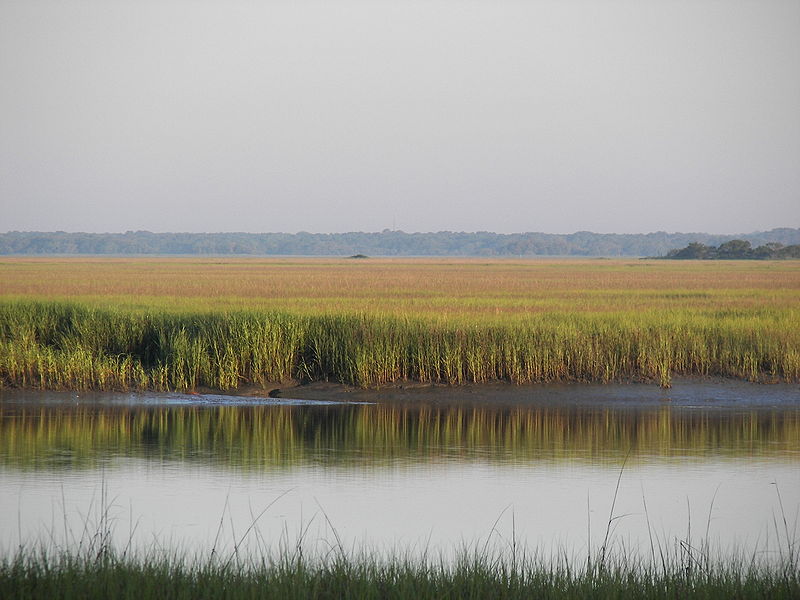
Low Country Beaufort South Carolina
“Deep, dark depression, excessive misery. If it weren’t for bad luck, I’d have no luck at all. Gloom, despair and agony on me.”  This Buck Owens and Roy Clark tune could be the mantra for the Wingo clan in Pat Conroy’s Prince of Tides.

Published in 1986, it follows the Wingo family’s desperate attempt to survive the South Carolina low country, each other and their rural community. They are a family of shrimpers dependent on the whims of nature. The twins Tom and Savannah were born in a hurricane. In the company of their older brother Luke, we learn to enjoy the beauty and solitude of the low country in spite of its difficult conditions.

The story flashes back and forth between New York City and South Carolina. Savannah has physically escaped her family and the low country by fleeing to New York, but mentally she is still imprisoned. The City and the world have embraced her poetry. Tom is a former high school football coach that can’t find a job. Tom travels to New York City to assist his sister recover from slitting her wrists. Prior to leaving South Carolina his wife, Salley informs him she is having an affair, and she’s not sure she wants Tom to come back home from New York.

Tom meets Savannah’s psychiatrist, Susan Lowenstein. She rich, she’s married to a famous violinist, and she is completely unhappy. Tom dumps his family’s tragic history on her in an attempt to heal Savannah, and possibly help himself. In a perfect example of misery loves company, Tom and Susan become extremely close friends, and end up dancing in the sheets.

Conroy uses the location as an antagonist in the story. Like the other characters the low country has tremendous superficial beauty, but the personality is mean. The low country symbolizes Conroy’s construct of people; pretty on the outside but cruel on the inside.

Conroy not only destroys the people in the story, he also destroys the low country.  Based on a true event, the government builds a plutonium factory in the middle of the salt marsh destroying the town, the Wingo’s home, the shrimp industry and ultimately their family. 

Conroy wrote a masterpiece. He writes very descriptive prose that helps the reader visualize the low country. At times he seems to drift breaking up the flow of the story, but it fits the literary style of the day. Prince of Tides received rave reviews, and Hollywood made a movie of it. Jimmy Buffett wrote a song about it. The story was written thirty years ago, but has anything changed?

The story epitomizes the sentiments of today. The characters have little respect for other people, and treat each other badly. The story contains a high degree of greed, and little respect for the environment and conversation. The plutonium though highly regulated still exists today. The plant is in the process of being upgraded to convert weapons grade plutonium to fuel for nuclear power plants and waste.


Tuesday, September 8, 2015

Getting to Know A Salt Marsh, Robinson Preserve

Brackish Pond Spoonbill Trail, Photo by The Quiet Image
A couple of weeks ago, we hiked the Spoonbill Trail at Robinson Preserve in Bradenton, Florida. We had planned on following the Osprey Loop on around, but we arrived during the hottest part of the day in the hottest month, August. The heat index spiked over 100 degrees. The afternoon clouds didn’t form, and there was no breeze off the Gulf of Mexico. We didn’t carry enough water, and we decided to turn back before climbing the forty foot observation tower.

We visited Palma Sola Botanical Garden in the morning, and decided to try Robinson Preserve in the afternoon. It was our first time to explore both of these destinations.  As I climbed out of the car at Robinson, the smell of salt marsh smacked me in the face. It brought back many fond memories of Eastern Shore, Virginia and St. Mark’s Wildlife Refuge, Florida. I’ve spent a considerable amount of time exploring both of these locations.

I prefer swamps and salt marshes to the beach. Wildlife is much more abundant around these locations. I never grew out of playing in the mud, and photographing birds and reptiles. These days I rather walk on a well marked elevated trail than trudging through knee-deep mud. I’ve graduated from a VW bug with a rusted out floorboard to a Honda Civic with carpeting. Also, my wife gets upset if I come home covered in mud.

In high school, I was lucky enough to attend marine biology camp at Chincoteague Bay Field Station, Virginia each year. I loved it. I got to play on the beach and inter-coastal for a week, while everyone else was stuck in a classroom studying for exams. I learned about the plants and animals of the salt marsh, and its importance to the ecosystem. The salt marsh smell became ingrained in my brain.

Some people don’t like the smell of the salt marsh. It smells like the anaerobic degradation of dead grass and animals mixed with a little bit of sulfur and salt water. To me it smells like renewal and life. The marsh provides an abundance of nutrients for animals to grow and thrive. Fish spawn in the pools, and fingerlings hide among the grasses. Without the salt marsh the oceans and seas would become barren wastelands.

The marsh provides fertile nesting grounds for birds. At Robinson Preserve we saw roseate spoonbills, ibis, great blue herons and ospreys. We even spotted a bald eagle. Thanks to marsh restoration programs like Robinson Preserve bald eagles are becoming more numerous.

We enjoyed our brief jaunt through the salt marsh in Bradenton. We plan on returning later in the year and spending more time once the weather becomes cooler in October. We look forward to doing the Osprey Loop, and walking on the boardwalk through the mangrove swamps.


Tuesday, April 21, 2015

Happy Earth Day

"The Earth seen from Apollo 17" by NASA/Apollo 17 
April 22, 2015 marks the 45th anniversary of Earth Day. Today people in general seem so much more aware of conservation and ecology. They drive hybrid cars, and refuse to drink water from plastic bottles.

My first Earth Day was in 1980. We sat on the Union Green at Penn State and listened to bands all day and into the night. We played ultimate frisbee. We sat on sheets from our dorm beds. Life was much different. 

We didn't have hybrid cars, and Perrier had only recently reintroduced bottled water. No one had cell phones, and you wandered through the crowd trying to connect with friends. In the process you met new friends, shared a drink and a smoke. This was BI, before Internet.

Even though people seem more aware of the issues, Earth Day seems to have shrunk in importance. Celebrations are held when it is convenient rather than on Earth Day. People fear skipping out on work or school to enjoy a few minutes. 

Celebrate Earth Day today. Don't eat lunch in front of the computer, instead eat outside. Get some fresh air, and see what the weekday sun looks like. Just maybe you'll be a little less stressed out at the end of the day.